
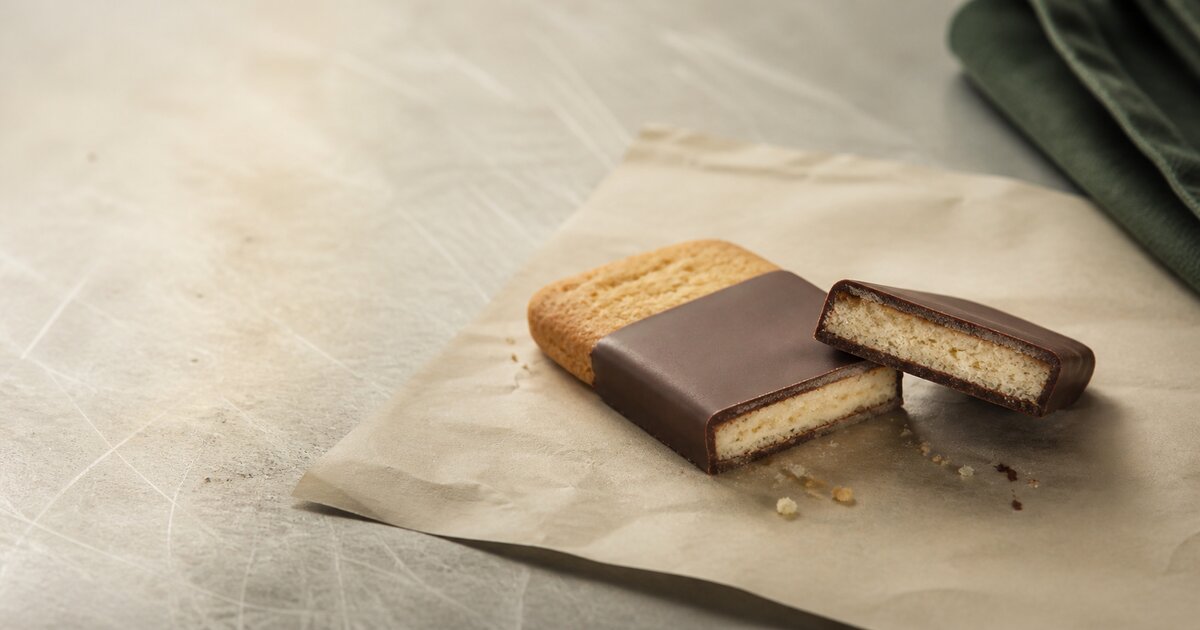
A tray of dipped biscuits gives a Chennai bakery a better purchasing question than the price printed beside a chocolate block. How much coating stays on each biscuit? Does it set cleanly before packing? Is the bite still right when the customer opens the box?
The answers belong to the exact formulation and the bakery’s process. A cheap block applied too thickly can be expensive in use. A couverture chosen for its name can disappoint if the workbench cannot support the finish it needs.
Start with the finished coating
Write the job on the purchase enquiry: thin biscuit dip, rigid moulded shell, flexible cake coating or soft filling. “Dark chocolate for bakery” leaves too much for the supplier to guess.
The government-hosted Craft Baker Grade XII text distinguishes compound’s vegetable-fat system from couverture’s cocoa butter. It explains why the cocoa butter in couverture needs controlled pre-crystallisation for chocolate work (chocolate section, printed pages 101–104). That is a useful starting distinction, though the text simplifies the range of commercial formulations.
For example, do not assume every compound uses hydrogenated fat. Puratos lists non-hydrogenated compound coatings as well as hard and soft products in its compound range. This is manufacturer information, not an independent taste comparison or a statement about what is stocked in Chennai.
| The bakery needs | What to ask about |
|---|---|
| A thin coat on a biscuit | Coating fluidity, pickup and the bite after setting |
| A moulded chocolate shell | Tempering requirements, shell thickness and release |
| A coating that cuts with a soft cake | Flexibility and clean cutting in that application |
| A filling or baked inclusion | A formulation specifically intended for that use |
A product can be good at one of these jobs without being the best choice for the others. The category name narrows the enquiry. It does not finish it.
Read the fat system and the instructions
For a couverture shell, tempering is part of obtaining the intended finish. Callebaut’s tempering guidance connects correct pre-crystallisation with setting, gloss, snap and contraction for release from a mould. Simply melting a block and letting it become solid again does not establish that those properties will be right.
Ordinary compound coatings use a different fat system and generally do not need cocoa-butter tempering. That saves a process step; it does not remove the need to follow their melting, application, cooling and storage instructions. Ask for those instructions with the sample, before agreeing to a carton.
Read the full ingredient declaration and technical sheet. A dark colour, a cocoa percentage or the word “premium” cannot tell the buyer everything needed about handling. Neither can spotting a single fat in the ingredients settle the product’s complete identity.
For the purchase decision, ask the supplier to state what the product is and what it is designed to do. Retain the label and specification. This article compares functionality; it does not determine a product’s legal name or make a health ranking between fat systems.
Fluidity changes the cost of a coat
Callebaut explains that chocolate fluidity affects shell thickness. Its more fluid chocolates suit thinner shells, while less fluid formulations have uses such as larger moulded figures. “More fluid” is therefore an application choice, not a universal quality score.
Compounds also differ within their category. Puratos’s Carat technical brochure separates high-fluidity thin coatings, thicker coatings and flexible or soft finishes. The brochure is an older manufacturer reference, used here to show why one compound cannot stand for the whole category. Confirm the current local specification separately.
That changes how a bakery should compare quotations. Record the material actually consumed to produce acceptable pieces:
Net coating consumed = coating issued to the trial - usable coating returned
Coating ingredient cost per accepted piece = net kilograms consumed × landed rate per kilogram ÷ accepted pieces
These are trial-accounting formulas, not measured savings. Use the invoice rate and actual trial quantities. Returned material counts only if the bakery’s approved handling rules allow it to be kept and used; material on rejected pieces or discarded during finishing stays in consumption.
Weighing a finished biscuit against an uncoated biscuit helps estimate pickup. But pickup alone misses what remains unusable in the bowl, on the tray or on a rejected piece. Keep that distinction visible when comparing the trial with the purchase invoice.
| Trial record | What it reveals |
|---|---|
| Material issued and usable return | Net coating consumption |
| Pieces finished and pieces accepted | Output that can actually be sold |
| Reject reason | Whether appearance, breakage or another defect caused the loss |
| Active finishing time and elapsed setting time | Labour demand and space occupied |
| Result after packing and holding | Whether the bench result survives the intended route |
The same denominator problem appears in tea cost per cup: material used for a batch must be related to the output that earns revenue. For coating trials, keep the biscuit base, labour and packaging outside the coating-only formula, then add them when assessing the finished item’s full cost. A lower coating cost does not by itself establish a better margin.
The cheaper block is only cheaper if the finished piece proves it.
Trial the route to the customer
A neat sample made at the supplier’s demonstration bench answers a different question from a biscuit packed in your bakery and delivered through your normal route. Ask for enough material to test the actual product, packaging and handling sequence.
Keep the base item and acceptance criteria the same. Use each coating’s own approved process; forcing both through identical temperatures would not be a fair comparison. Record room and product conditions so a successful result can be repeated.
For a Chennai bakery, the practical question is whether the finish survives its real setting area, dispatch wait and transport. Do not read “no tempering” as a promise of heat resistance. A claim about one formulation cannot prove that every compound will hold in a warm delivery vehicle.
Judge appearance and bite at the intended eating condition, not only straight from a cooling cabinet. Check whether pieces mark the packaging, break during handling or give a coat that feels too thick for the biscuit. These are proposed acceptance checks, not findings from a Mikro product trial.
Once the coating is approved, put its finishing and setting stages into the daily bakery production plan. The customer was promised a packed order at pickup time, so the schedule needs to reach that point, rather than stop when the biscuits leave the oven.
Approve the specification, then the reorder
A small purchasing trial
Send the supplier the intended item, coating style, packaging and handling conditions. Request the exact formulation’s technical sheet and sample.
Set the bakery’s expectations for appearance, bite, coating coverage and packed condition before comparing samples. Keep notes beside each result.
Record issued material, permitted usable return, accepted pieces, rejects and time. Compare coating ingredient cost before building full item cost.
Save the supplier, exact product, specification and working instructions. Treat a changed formulation or proposed substitute as a new trial.
Review the effect on the wider business after normal production has run. The food-cost calculator uses opening stock, purchases, closing stock and sales for a reporting period. It can support that review; it does not calculate coating pickup or replace the sample trial.